
राखीगढ़ी से मिले मानव कंकाल उन्नत वैज्ञानिक अनुसंधान के लिए भारतीय मानवविज्ञान सर्वेक्षण को सौंपे गए RakhigarhiExcavation, IndusValleyResearch, AncientDNAAnalysis
नई दिल्ली(Courtesy PIB): हरियाणा के ऐतिहासिक पुरातत्व स्थल राखीगढ़ी से हाल ही में उत्खनन के दौरान मिले मानव कंकालों को विस्तृत वैज्ञानिक जांच के लिए भारतीय पुरातत्व सर्वेक्षण (ASI) द्वारा भारतीय मानवविज्ञान सर्वेक्षण (AnSI) को औपचारिक रूप से सौंप दिया गया है। AnSI संस्कृति मंत्रालय के अधीन एक प्रतिष्ठित राष्ट्रीय अनुसंधान संस्थान है।
AnSI के निदेशक प्रोफेसर बी.वी. शर्मा ने बताया कि दोनों संस्थानों के बीच हाल ही में हस्ताक्षरित एक समझौता ज्ञापन (MoU) के तहत यह स्थानांतरण किया गया है। उम्मीद है कि इससे सिंधु-सरस्वती सभ्यता के सबसे महत्वपूर्ण शहरी केंद्रों में से एक के बहु-विषयक अनुसंधान (Multidisciplinary Research) को काफी गति मिलेगी।
राखीगढ़ी: सिंधु-सरस्वती सभ्यता का सबसे बड़ा केंद्र
हरियाणा में लगभग 550 हेक्टेयर क्षेत्र में फैला राखीगढ़ी, सिंधु-सरस्वती सभ्यता की अब तक की सबसे बड़ी ज्ञात बस्ती के रूप में मान्यता प्राप्त है। यहाँ हुए पुरातात्विक उत्खनन से प्रारंभिक हड़प्पा काल से लेकर परिपक्व हड़प्पा काल तक के निरंतर निवास के प्रमाण मिले हैं। इनमें सुनियोजित बस्तियाँ, जल निकासी प्रणालियाँ, शिल्प उत्पादन केंद्र, व्यापार नेटवर्क और कब्रिस्तान शामिल हैं।
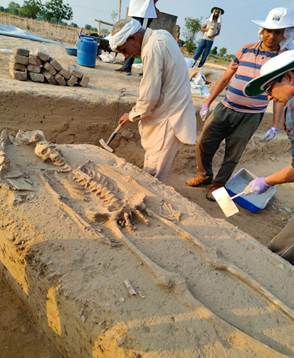
ASI की उत्खनन शाखा-II (ग्रेटर नोएडा) द्वारा वर्ष 2025-26 के सत्र में किए गए उत्खनन के दौरान, 'मैंड नंबर 7' (जो पहले कब्रिस्तान के रूप में चिन्हित था) से आठ कब्रों का पता चला था। यहाँ से प्राप्त तीन पूर्ण मानव कंकाल और अन्य अवशेषों को विस्तृत जांच के लिए कोलकाता स्थित AnSI की प्राचीन मानव कंकाल प्रयोगशाला और रिपॉजिटरी में स्थानांतरित कर दिया गया है। इन स्थलों से प्राप्त शेष कंकाल अवशेष भी अगले कुछ दिनों में स्थानांतरित किए जाने की संभावना है।
आधुनिक वैज्ञानिक तकनीकों का होगा उपयोग
शोधकर्ताओं का मानना है कि इन अवशेषों से प्राचीन डीएनए (aDNA) विश्लेषण, स्टेबल आइसोटोप अध्ययन, अस्थि विज्ञान मूल्यांकन (Osteological Assessments), पेलियोपैथोलॉजिकल जांच और पर्यावरणीय पुनर्निर्माण जैसी आधुनिक वैज्ञानिक तकनीकों को लागू करने का एक दुर्लभ अवसर मिलेगा। इन तरीकों से हड़प्पा काल के दौरान लोगों के पूर्वज, प्रवास के तौर-तरीके, खान-पान, बीमारियों का प्रसार और पर्यावरण के साथ उनके जुड़ाव के बारे में मूल्यवान जानकारियां मिलने की उम्मीद है।
AnSI के अनुसार, यह शोध कई प्रमुख वैज्ञानिक संस्थानों के सहयोग से किया जाएगा, जिनमें शामिल हैं:
बीरबल साहनी पुराविज्ञान संस्थान (BSIP), लखनऊ
यूनिवर्सिटी कॉलेज लंदन (UCL)
बनारस हिंदू विश्वविद्यालय (BHU) की प्राचीन डीएनए अनुसंधान विशेषज्ञ टीम
विशेषज्ञों की प्रतिक्रिया
डॉ. कुमारसामी थंगराज (वरिष्ठ वैज्ञानिक, CCMB हैदराबाद): उन्होंने इस पहल का स्वागत करते हुए कहा कि राखीगढ़ी के अवशेषों पर प्राचीन डीएनए तकनीक लागू करने से उनके अनुवांशिक इतिहास (Genetic History) के बारे में महत्वपूर्ण जानकारी मिल सकती है। इससे यह समझने में मदद मिलेगी कि 3000 ईसा पूर्व से मानव जीनोम का विकास और अनुकूलन कैसे हुआ।
प्रोफेसर ज्ञानेश्वर चौबे (BHU): उन्होंने इस सहयोग को हड़प्पा सभ्यता के जीनोमिक इतिहास के पुनर्निर्माण में एक बड़ा कदम बताया। उन्होंने कहा कि डीएनए अनुसंधान को अस्थि विज्ञान और आइसोटोप अध्ययन के साथ जोड़ने से इस आबादी के स्वास्थ्य, गतिशीलता और जीवन शैली के बारे में पुख्ता सबूत मिलेंगे।
प्रोफेसर विजय प्रकाश (आंध्र विश्वविद्यालय) और प्रोफेसर उदय प्रताप सिंह (लखनऊ विश्वविद्यालय): दोनों विद्वानों ने इसे देश की पेलियोएंथ्रोपोलॉजिकल (पुरामानवविज्ञानी) अनुसंधान परंपरा को मजबूत करने वाला मील का पत्थर बताया है।RakhigarhiExcavation, IndusValleyResearch, AncientDNAAnalysis
अनुसंधान क्षमताओं का पुनरुद्धार
AnSI के अधिकारियों ने उल्लेख किया कि वर्ष 1945 में अपनी स्थापना के बाद से ही संस्थान सिंधु-सरस्वती स्थलों से प्राप्त अवशेषों पर शोध करता रहा है, लेकिन समय के साथ कुछ चुनौतियों के कारण इन गतिविधियों में कमी आ गई थी। हालांकि, हाल के वर्षों में समर्पित अनुसंधान टीमों के गठन और कर्मियों के विशेष प्रशिक्षण के माध्यम से इस शोध को पुनर्जीवित करने के प्रयास तेज किए गए हैं।
AnSI ने हाल ही में कई सिंधु-सरस्वती स्थलों के कंकाल अवशेषों पर पेलियोपैथोलॉजिकल अध्ययन पूरा किया है और वह इसके निष्कर्षों के आधार पर वैज्ञानिक प्रकाशन तैयार कर रहा है। भविष्य में संस्थान भारतीय प्राणी सर्वेक्षण (ZSI), भारतीय वनस्पति सर्वेक्षण (BSI), भारतीय भूवैज्ञानिक सर्वेक्षण (GSI) और पुरा-जलवायु (Palaeoclimate) पर काम कर रहे समूहों के साथ भी सहयोग बढ़ाने की योजना बना रहा है।
डेक्कन कॉलेज (पुणे) के मानवविज्ञानी प्रोफेसर सुभाष वालिंबे और राष्ट्रीय स्मारक प्राधिकरण के पूर्व अध्यक्ष प्रोफेसर किशोर के. बासा ने भी इस पहल की सराहना की है। उनके अनुसार, यह अध्ययन न केवल मानवविज्ञान, बल्कि इतिहास, पुरातत्व, पोषण और चिकित्सा इतिहास के दृष्टिकोण से भी बेहद प्रासंगिक है।
ASI और AnSI का यह संयुक्त प्रयास भारत के प्राचीन अतीत के अध्ययन में पुरातत्व, मानवविज्ञान, आनुवंशिकी और पर्यावरण विज्ञान को एक साथ लाने का एक बड़ा कदम है।
Human Skeletal Remains from Rakhigarhi Transferred to Anthropological Survey of India for Advanced Scientific Research
NEW DELHI: Human skeletal remains recently excavated from the archaeological site of Rakhigarhi in Haryana have been formally handed over by the Archaeological Survey of India (ASI) to the Anthropological Survey of India (AnSI) for detailed scientific investigation. AnSI is a premier national research institute under the Ministry of Culture, Government of India.

Prof. BV Sharma, Director of AnSI, stated that the transfer, carried out under a recently signed Memorandum of Understanding (MoU) between the two institutions, is expected to significantly advance multidisciplinary research into one of the most important urban centers of the Indus-Saraswati Civilization.
Rakhigarhi: The Largest Center of Indus-Saraswati Civilization
Spread across approximately 550 hectares in Haryana, Rakhigarhi is widely recognized as the largest known settlement of the Indus-Saraswati Civilization. Archaeological excavations here have revealed evidence of continuous habitation from the Early Harappan to the Mature Harappan periods, including planned settlements, drainage systems, craft production centers, trade networks, and burial grounds.
During excavations conducted by ASI’s Excavation Branch-II (Greater Noida) in the 2025–26 field season, archaeologists uncovered eight burials at Mound No. 7, an area previously identified as a cemetery. Three complete human skeletons, along with skeletal fragments recovered from these burials, have now been transferred to AnSI’s ancient human skeletal repository and laboratory in Kolkata for detailed examination. The remaining skeletal materials obtained from these sites are expected to be transferred within the next few days.
Application of Advanced Scientific Techniques
Researchers believe these remains present a rare opportunity to apply modern scientific techniques, including:
Ancient DNA (aDNA) analysis
Stable isotope studies
Osteological assessments
Palaeopathological investigations
Environmental reconstruction
These approaches are expected to provide valuable insights into the ancestry, migration patterns, diet, disease prevalence, adaptation strategies, and human-environment interactions during the Harappan period.
According to AnSI, the research will be conducted in collaboration with leading scientific institutions, including:
Birbal Sahni Institute of Palaeosciences (BSIP), Lucknow
University College London (UCL)
A specialized team of scholars from Banaras Hindu University (BHU) focusing on ancient DNA research
RakhigarhiExcavation, IndusValleyResearch, AncientDNAAnalysis
Experts' Insights and Reactions
Dr. Kumaraswamy Thangaraj (Senior Scientist, CCMB Hyderabad): Welcoming the initiative, the Padma Shri awardee stated that applying ancient DNA technology to the Rakhigarhi remains could reveal critical information about their genetic history. This will help scientists understand how human genomes have evolved, adapted, and undergone natural selection since around 3000 BCE.
Professor Gyaneshwer Chaubey (BHU): He described the collaboration as a major step forward in reconstructing the genomic history of the Harappan Civilization. Integrating ancient DNA research with osteological and isotopic studies will provide definitive evidence regarding the ancestry, health, mobility, and lifestyles of the Indus Valley population.
Professor Vijay Prakash (Andhra University) & Professor Udai Pratap Singh (Lucknow University): Both scholars described the transfer as an important milestone in strengthening India’s palaeoanthropological research tradition, ensuring that biological heritage is scientifically analyzed and preserved by national institutions for future generations.
Revival of Palaeoanthropological Research
Officials noted that while AnSI has maintained a long tradition of osteological research on remains recovered from Indus-Saraswati sites since its establishment in 1945, activities in this field had diminished over the years due to various challenges. However, in recent years, the institution has undertaken active efforts to revive palaeoanthropological research through the formation of dedicated research teams and specialized training programs for scientific personnel.
AnSI has recently completed palaeopathological studies on skeletal remains from several Indus-Saraswati sites and is preparing scientific publications based on its findings. Looking ahead, the institution plans to expand collaborations with organizations such as the Zoological Survey of India (ZSI), Botanical Survey of India (BSI), Geological Survey of India (GSI), and research groups working on palaeoclimate.
Anthropologist Professor Subhash Walimbe (formerly of Deccan College, Pune) and former National Monument Authority Chairman Professor Kishore K. Basa also welcomed the revival, noting that such intensive anthropological examinations are highly relevant not just for anthropology, but also for history, archaeology, nutrition, disease history, and genetics.
This joint collaboration between ASI and AnSI represents a significant milestone in integrating archaeology, anthropology, genetics, and environmental sciences to understand the origins, health, mobility, and biological history of one of the world's earliest urban civilizations.


