
Ground Report: Administrative Neglect Leaves Korku Tribe in Bhind-Gohad Facing Civil Crisis.KorkuTribeStruggles, BasicFacilitiesCrisis, TribalRightsIndia
Updated: Jun 3
Bhind-Gohad (Madhya Pradesh) | Special Coverage by Rajkamal Gupta (Gamaki Media & Aabadi Ki Goonj)
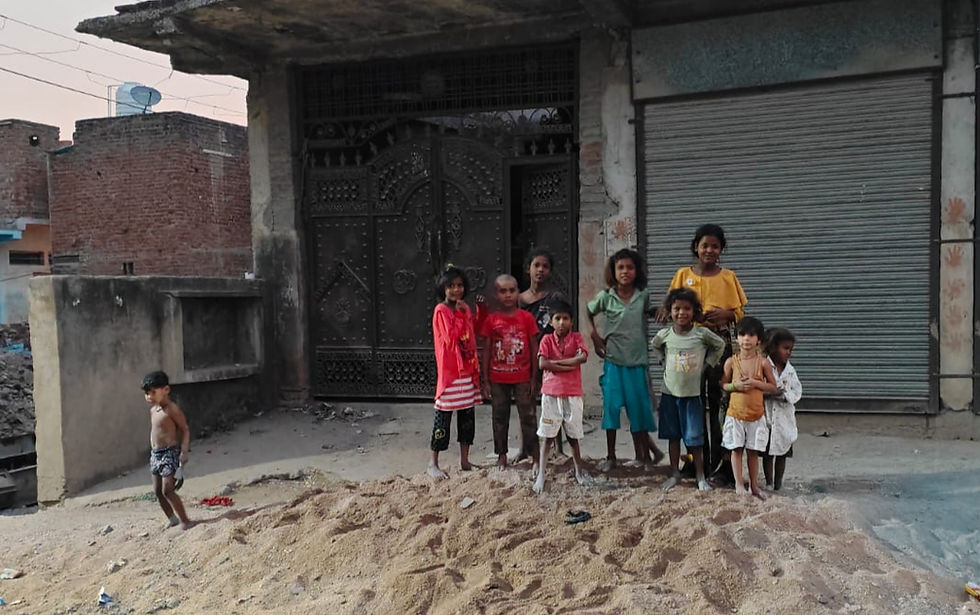
Despite various welfare claims made by the Madhya Pradesh government regarding tribal development and empowerment, a recent ground investigation conducted between May 12 and May 15, 2026, reveals a starkly different reality in Bhind district. The Korku tribe residing in the Bhind district and Gohad tehsil continues to endure severely substandard living conditions with near-zero access to basic amenities. Highlighting this administrative oversight, the local administration has failed to construct even a single community hall (Samudaik Bhavan) across these tribal areas, leaving the community without any designated shelter for social or public gatherings.
The Reality on the Ground: Key Findings from Gohad and Bhind
An on-site investigation by the joint team of Gamaki Media and Aabadi Ki Goonj across various wards of Gohad tehsil and Bhind city highlighted critical infrastructure deficits:
1. Severe Sanitation Issues near Residential Zones (Gohad)
In Ward Number 01, Chhatarpur (Gohad Tehsil), Korku families are living in close proximity to a major open drainage canal flowing directly behind their makeshift dwellings. The area is choked with accumulated waste and stagnant water, creating severe odor issues and high mosquito breeding rates, which poses a persistent risk of vector-borne disease outbreaks.
KorkuTribeStruggles, BasicFacilitiesCrisis, TribalRightsIndia
2. Lack of Permanent Housing
Photographic evidence confirms that Korku families are living in temporary tents constructed out of bamboo poles, torn fabrics, and plastic tarpaulins. Lacking permanent houses, residents are forced to spend their days on traditional woven cots (khatiyas) directly exposed to extreme summer heat and harsh sunlight.
3. Critical Drinking Water Shortages
The water crisis in the region forces women and young children to wait in extreme heat with plastic buckets, steel utensils, and jerrycans. Drinking water is gathered through makeshift, unorganized pipelines laid directly across muddy patches on the ground. The complete absence of structured drainage further leads to waterlogging right outside their doorsteps.
4. Widespread Neglect Across Bhind Urban Wards
This structural neglect extends directly into Bhind city. The Korku tribal populations residing natively in Ward Number 04 (Signal Pura), Ward 05 (Indra Nagar, behind School No. 2), and Ward Number 08 (Gandhi Nagar, near the Bus Stand) remain entirely overlooked by local municipal authorities.
Key Grievances Highlighted by the Community
Local resident Veerendra Kumar Korku detailed the primary failures of the local administrative machinery:
Non-Issuance of Caste Certificates: Due to procedural delays in the local administration, children of the Korku tribe are unable to secure official caste certificates, completely blocking their access to state welfare and educational schemes.
Absence of Community Infrastructure: No public or community halls have been provisioned in these tribal localities by the administration.
Deficits in Education and Public Ration Distribution: Systemic gaps have deprived children of access to proper schooling and their rightful food rations under public distribution systems.
The collective grievances and documented evidence have been officially brought to the direct attention of the District Collector of Bhind, Kirodi Lal Meena, by the reporting journalists.
Preceding Structural Issues: Gond and Sahariya Communities Also Affected
This investigation is part of a broader pattern of tribal marginalization previously reported in the district by Gamaki Media and Aabadi Ki Goonj:
The Mau Tehsil Dispute: Members of the Gond tribe possess valid legal land titles, government lease documents (pattas), and tax receipts. Despite this, local revenue authorities (Tehsildar) and the Mau Municipal Council have restricted them from accessing benefits under the Pradhan Mantri Awas Yojana (PMAY), while outside elements attempt to displace them from their ancestral lands.
The Malanpur (Tilori Village) Demolitions: Houses belonging to the indigenous Sahariya tribe, who had inhabited the area for generations, were completely demolished under the structural mandate of road construction and industrial expansion. Following initial ground reports, relief materials were mobilized to the site by the Bharat Vikas Parishad and various human rights organizations.
Visual Evidence from Mehgaon: Previously documented visual evidence from the Mehgaon region similarly demonstrates severe waterlogging and heavy garbage accumulation in tribal clusters, where residents and livestock are forced to coexist in highly unhygienic environments.


